
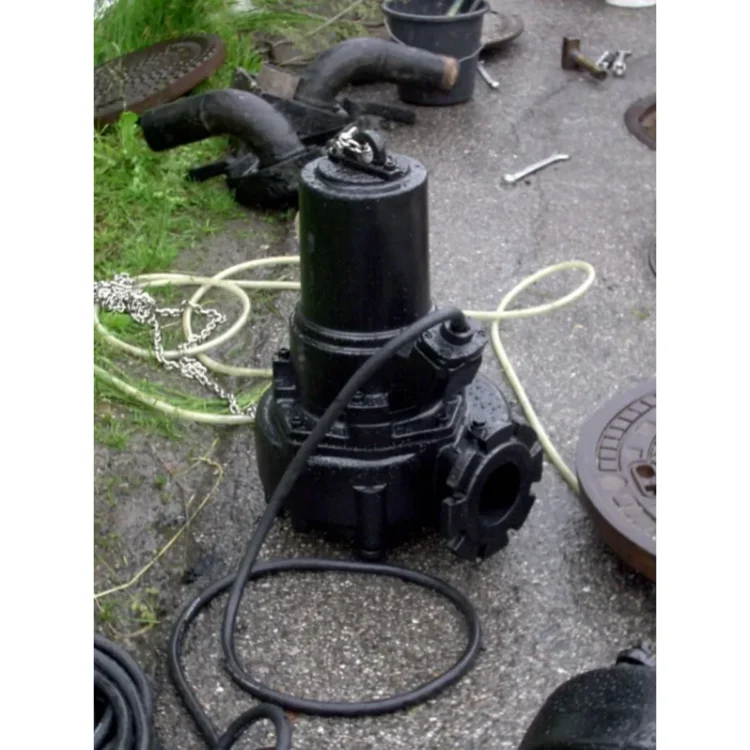
Stainless Steel Submersible Pump
Stainless steel submersible pump for sewage, effluent and corrosive liquids, with sealed, protected motors. Request partner pricing.
Description
A stainless steel submersible pump works underwater to move sewage, effluent and corrosive liquids that would quickly damage an ordinary pump. Biozone supplies stainless steel submersible pumps to contractors, plant operators and industrial users across Kenya for drainage, wastewater and process duties.
What is a stainless steel submersible pump?
The pump and its motor are sealed in one unit and lowered into the liquid, so there is no priming and the water itself cools the motor. The casing and wetted parts are cast or made from stainless steel, normally grade 304 or 316, which resists corrosion. Grade 316 tolerates a wider pH range than 304, so it is the usual choice for harsher liquids. Models range from small units for clean or lightly dirty water to heavy sewage pumps designed to pass solids and fibres.
Key features
- Corrosion-resistant stainless steel construction in 304 or 316 grades
- Double mechanical seals on the oil chamber to keep water out of the motor
- Motor windings with Class F insulation, and built-in thermal protection on smaller motors
- Lightweight, hygienic and energy-efficient design
- Options for non-clogging impellers that pass solids and long fibres
- High-temperature motor options for hotter liquids
Limits such as liquid temperature, immersion depth, density, pH and supply voltage are set for each model, so confirm them when you enquire. Standard models are designed for single phase or three phase 50 Hz supply.
Where a stainless steel submersible pump is used
- Sewage and wastewater lifting, including sumps and lift stations
- Factory effluent and chemical or electroplating plants
- Aquaculture and food and beverage processing
- Construction sites, hospitals, residential areas and municipal projects
- Mining, farm irrigation and general drainage
It complements our standard sewage pumps where the liquid is corrosive, hot or contains chemicals.
How it fits your treatment system
In a wastewater treatment plants, the pump lifts raw sewage to the screens and first tank, or moves liquid between stages. Fit a grease trap upstream where kitchens are involved, and follow the pump with suitable pipework, non-return valves and isolation valves. For dosing chemicals into the line, see our dosing pumps.
Choosing the right pump
Choose by flow, head, solids size, liquid chemistry and power supply. Tell us the vertical lift, pipe length and diameter, the liquid you are pumping and its temperature, and the daily volume. Choose 316 stainless steel for aggressive liquids, and a non-clogging impeller where the liquid carries solids or fibres.
Care and maintenance
Inspect the sump regularly for rags and plastics, test float switches, and check seals and the oil chamber on the maker schedule. Never run the pump dry, lift it by its handle or chain rather than the cable, and keep a spare pump for critical sites. Duty and standby pumps that alternate give even wear and better resilience.
Our team can review your sump, pipe layout and expected volume and suggest controls and spares so that your station keeps running when one pump needs service.
Stainless Steel Submersible Pump price in Kenya for contractors and partners
We do not publish a public price for this product, because the right unit and price depend on size, quantity and delivery location. Use our enquiry form to request partner pricing and our team will reply with a quote. You can also request pricing by phone or WhatsApp on +254 111 715 578 (WhatsApp us).
Common questions
What is the difference between 304 and 316 stainless steel pumps?
Grade 316 resists a wider range of chemicals and pH than 304, so it is used for more aggressive liquids.
Can a stainless steel submersible pump handle sewage?
Yes, where it is designed for sewage, with a non-clogging impeller. Tell us your duty and we will recommend a model.
If you are unsure which option suits your site, send us a short description of the plant, the volumes involved and where it is located. Our engineers will review it and reply with a clear recommendation, a list of any accessories you need and partner pricing, so that you can quote your own clients with confidence.
Learn more: Submersible pump overview on Wikipedia.
Only logged in customers who have purchased this product may leave a review.
Reviews
There are no reviews yet.