
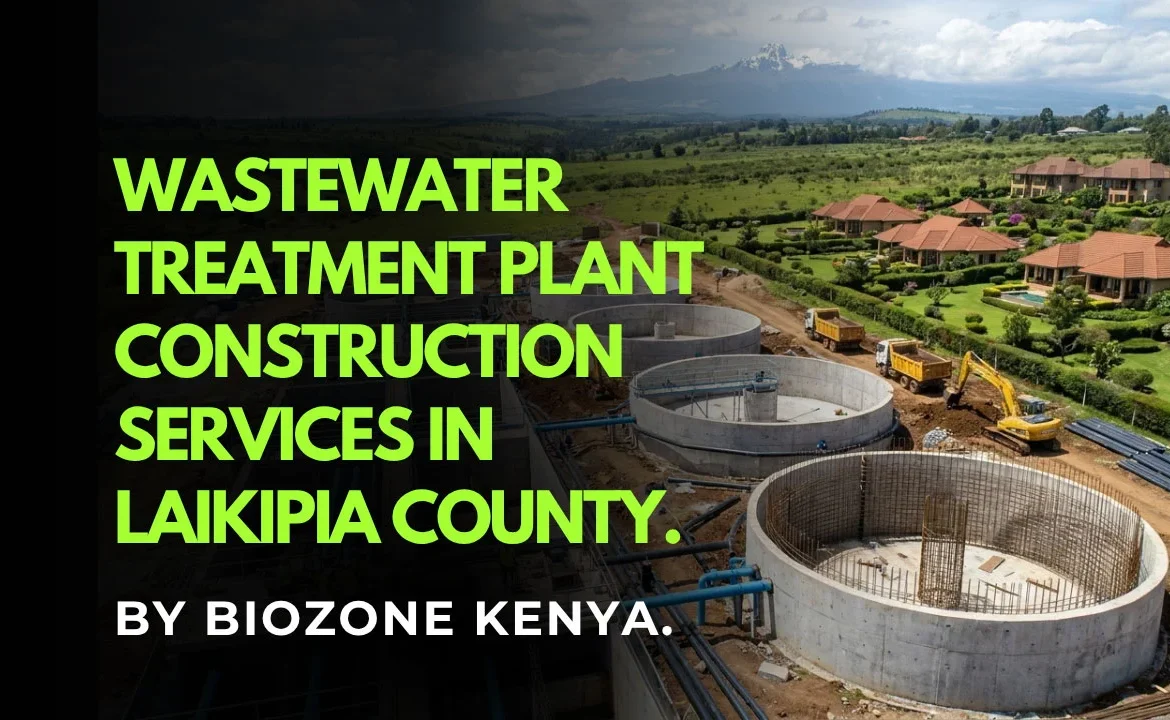
Wastewater Treatment Plant Construction in Laikipia
Wastewater Treatment Plant Construction in Laikipia; Protecting the Conservation Economy at the Heart of Kenya
Laikipia County sits on the Equator at the heart of northern Kenya, spanning 9,462 square kilometres of plateau, rangeland, highland forest, and semi-arid lowland. It is one of Kenya’s most ecologically significant counties, home to the highest wildlife population outside gazetted protected areas anywhere in Africa, over 40 wildlife conservancies including Ol Pejeta, Lewa, Borana, Loisaba, Ol Jogi, Solio, and Segera, and two contrasting urban centres: Nanyuki to the southeast and Nyahururu to the southwest.
This is a county where the economy and the environment are inseparable. Wildlife tourism, ranching, greenhouse horticulture, and conservation-linked hospitality generate the majority of Laikipia’s revenue. The county’s rivers, Burguret, Segera, Naromoru, Ewaso Narok, Pesi, Ngobit, and Liki, sustain both wildlife and agriculture across the plateau. And it is precisely this ecological wealth that makes wastewater treatment plant construction in Laikipia not just a regulatory requirement, but an existential necessity for the county’s economic future.
Laikipia County has no centralised sewerage network outside limited infrastructure in parts of Nanyuki town. Across all three constituencies, Laikipia East, Laikipia West, and Laikipia North, and all 15 wards, every residential estate, school, hospital, hotel, conservancy lodge, flower farm, military facility, and agro-processing operation generates wastewater that must be treated on-site. Inadequately managed effluent in a county this ecologically sensitive does not merely violate the National Environment Management Authority (NEMA)‘s Water Quality Regulations, 2006, it threatens the rivers, wildlife corridors, and groundwater resources on which the entire conservation economy depends.
Biozone (Blueflame Energy Solutions Ltd) brings over 10 years of proven experience and more than 4,000 completed wastewater treatment systems across Kenya to every project in Laikipia County. From compact residential biodigester systems for Nanyuki estates to bespoke effluent treatment plants for high-end conservancy lodges, flower farms, and military installations, Biozone provides complete lifecycle service, from feasibility and engineering design through construction, commissioning, and long-term maintenance.
To start with a wastewater treatment consultancy that assesses your site and compliance requirements, contact Biozone’s engineering team today.
Who Needs Wastewater Treatment Plant Construction in Laikipia County?
Laikipia County’s unique combination of conservation, tourism, military, horticultural, and agricultural economic activity creates wastewater treatment needs that are as diverse as the county itself.
Residential Developments
Nanyuki town, with a population of over 72,000 and growing rapidly as a lifestyle destination for Nairobi professionals, is experiencing sustained residential development across Thingithu, Nanyuki Central, Umande, and Tigithi wards. New apartments, townhouses, and gated communities are rising throughout the town and its peri-urban fringes. Nyahururu town, in Laikipia West, is similarly expanding, with residential growth across Githiga, Igwamiti, and Salama wards. None of this development has access to a functional centralised sewer.
Without a compliant domestic wastewater treatment system, developers cannot obtain NEMA approvals, and residents face long-term health risks from inadequate waste disposal. Biozone’s sewage water recycling systems start from 4,000 litres, scale to any estate size, fit sites as small as 2 square metres, and carry a 5-year tank warranty. Verified effluent of BOD 11 mg/litre and Ammoniacal Nitrogen 7 mg/litre means the treated water is suitable for garden irrigation, a practical benefit for Nanyuki’s well-watered residential landscape below Mount Kenya.
Commercial Properties
Nanyuki’s commercial centre, serving farms, ranches, game parks, and conservancies across a wide radius, is one of the most active market towns in central Kenya. Hotels, restaurants, guesthouses, retail outlets, petrol stations, and agro-input suppliers across Nanyuki and Nyahururu generate commercial wastewater daily with no sewer connection. Smaller market centres across all three constituencies, Rumuruti, Doldol, Ngobit, Timau, and Marmanet, face identical challenges. These businesses require compact, reliable commercial sewage treatment systems that deliver NEMA-compliant effluent with minimal maintenance demands.
Tourism and Conservation Facilities
The conservancy lodges, tented camps, safari resorts, and hospitality facilities operating across Laikipia County’s 40+ conservancies, including the Fairmont Mount Kenya Safari Club, Sweetwaters Tented Camp at Ol Pejeta, Borana Lodge, Loisaba Star Beds, and dozens of others, are among Kenya’s most ecologically conscientious tourism operations. Yet even the most sustainably managed lodge generates wastewater from guest rooms, kitchens, laundry, staff facilities, and swimming pools.
In ecologically sensitive conservancy settings, adjacent to wildlife corridors, river courses, and sensitive habitats, wastewater treatment must achieve the highest possible effluent standards. Biozone designs conservancy WWTP systems that produce reuse-quality effluent, minimise environmental impact, and align with the sustainability commitments that Laikipia’s conservation tourism sector communicates to its international guests and partners.
Institutions
Nanyuki Teaching and Referral Hospital, the largest medical facility in the county, treating an average of 500 patients daily, along with Nyahururu County Referral Hospital, Rumuruti Sub-County Hospital, and health centres distributed across all 15 wards generate hospital wastewater requiring specialist treatment and disinfection.
Nanyuki High School, Moi Equator Girls’ High School, St. Christopher’s School, Braeburn International School, and secondary schools across all three constituencies serve large student populations whose wastewater must be managed on-site. Military facilities, including the Kenya Air Force base, Kenya Army units, and the British Army Training Unit Kenya (BATUK) at Nyati Barracks, operate some of the county’s largest institutional populations and require robust, reliable treatment systems.
Wastewater Treatment Plant Construction Services in Laikipia, By Client Type
Laikipia County’s unique blend of conservation, military, tourism, horticulture, and agricultural activity creates a highly diverse set of wastewater treatment requirements. Here is how Biozone’s services apply to the specific client types operating across the county.
Wastewater Treatment Plant Construction for Primary Schools in Laikipia
Primary schools across Laikipia County, from urban schools in Nanyuki and Nyahururu to rural schools serving pastoral communities in Mukogodo East, Mukogodo West, Segera, and Sosian wards in Laikipia North, generate concentrated domestic wastewater during school hours from toilet facilities and kitchen blocks. The challenge of school WWTP design in Laikipia is the highly variable loading pattern: peak during school hours and term time, near-zero during evenings, weekends, and holidays.
Biozone’s SBR systems are particularly well suited to this load pattern, adjusting naturally to variable inflow without system instability. For rural schools in Laikipia North’s semi-arid Mukogodo and Doldol areas, where road access is difficult and power supply may be intermittent, Biozone’s compact, low-power biodigester systems provide a practical, low-maintenance solution that operates reliably without the operational complexity of larger mechanical systems.
Wastewater Treatment Plant Construction for Secondary Schools in Laikipia
Boarding secondary schools in Laikipia County generate high-volume, sustained domestic wastewater 24 hours a day during term time. Nanyuki High School, Moi Equator Girls’ High School, and boarding schools across Laikipia West and Laikipia North must manage dormitory, dining, kitchen, and ablution wastewater from populations of several hundred to over a thousand students.
These institutions are increasingly subject to NEMA compliance checks, and those relying on aging septic tanks face growing enforcement risk. Biozone designs boarding school systems that handle peak morning and evening loading, produce effluent suitable for school grounds irrigation, and require only quarterly professional maintenance to sustain performance year after year. Biozone’s biodigester maintenance and rehabilitation plans ensure systems stay compliant between professional visits.
Wastewater Treatment Plant Construction for International and Private Schools in Laikipia
International schools operating in Nanyuki, including St. Christopher’s School and Braeburn International, serve the children of expatriate families, conservancy managers, NGO workers, military personnel, and high-income Kenyan families. These schools are often held to higher environmental and operational standards than public institutions, both by their governing bodies and by the parents they serve.
Biozone designs private and international school WWTP systems that are discrete, low-odour, highly reliable, and capable of producing reuse-quality effluent, consistent with the environmental ethos of the schools and the wider conservation community in which they operate.
Wastewater Treatment Plant Construction for Hospitals and Health Centres in Laikipia
Nanyuki Teaching and Referral Hospital, treating 500+ patients daily, and Nyahururu County Referral Hospital are Laikipia County’s most significant healthcare wastewater generators. Hospital effluent contains pathogenic microorganisms, pharmaceutical residues, blood and tissue waste, and disinfectants, requiring biological treatment followed by mandatory tertiary disinfection before any form of discharge or disposal.
Sub-county hospitals in Rumuruti, Doldol, and rural health centres across all 15 wards face identical compliance obligations, albeit at smaller volumes. Biozone designs hospital WWTP systems with UV disinfection as a standard component, not an optional upgrade, producing effluent that meets both NEMA discharge standards and Ministry of Health healthcare waste management guidelines.
Wastewater Treatment Plant Construction for Military and Security Installations in Laikipia
The Kenya Air Force base, Kenya Army installations, and the British Army Training Unit Kenya (BATUK) at Nyati Barracks collectively represent some of the largest institutional populations in Laikipia County. Military facilities generate large volumes of domestic wastewater from barracks, messes, training facilities, kitchens, and medical units, often in locations where connection to a public sewer is not possible and where operational continuity requirements demand systems that are highly reliable.
Biozone’s proven track record with large institutional facilities, combined with the availability of mobile and portable WWTP units for temporary field deployment, makes Biozone a capable partner for both permanent military installation wastewater systems and field training area sanitation.
Wastewater Treatment Plant Construction for Hotels and Luxury Lodges in Laikipia
Nanyuki’s hotel sector, including Sportsman’s Arms Hotel, Peaks Hotel, Beisa Hotel, and numerous mid-range and budget establishments, generates kitchen, laundry, and guest room wastewater in a town without a functional sewer connection. In the conservancy landscape across Laikipia East and Laikipia North, luxury lodges, Fairmont Mount Kenya Safari Club, Sweetwaters Tented Camp, Borana Lodge, Loisaba Lodo Springs, Ol Jogi’s camp facilities, and similar high-end properties, operate in the most ecologically sensitive wastewater management environments in Kenya.
For these operations, where wastewater discharge to a river or wildlife corridor would be catastrophic for brand reputation and conservation credentials, MBR systems producing the highest effluent quality in the smallest footprint are often the most appropriate technology. Biozone’s wastewater treatment consultancy assesses each lodge’s specific location, ecological context, and effluent reuse goals before making a technology recommendation.
Wastewater Treatment Plant Construction for Conservancy Lodges and Tented Camps in Laikipia
Wildlife conservancies across Laikipia, Ol Pejeta, Lewa, Borana, Loisaba, Ol Jogi, Solio, Segera, Il Ngwesi, Mugie, Mpala, El Karama, and others, operate lodges, tented camps, and staff facilities in locations that are often remote, without grid power, and immediately adjacent to rivers, wetlands, and wildlife habitats. Wastewater management in these settings must achieve the highest environmental standards, not because NEMA compels it alone, but because the conservation ethos and the sustainability expectations of the international guests who visit these properties demand it.
Biozone designs conservancy wastewater systems that are compact, quiet, low-energy, visually unobtrusive, and capable of producing reuse-quality effluent for irrigation of camp grounds and staff gardens. Mobile and above-ground installation options are available for locations where excavation is impractical.
Wastewater Treatment Plant Construction for Flower Farms and Horticulture in Laikipia
The Nanyuki–Timau corridor hosts a significant concentration of horticultural operations, Likii Flower Farm, Traco Farm, Kongoni Farm, and several others along the Nanyuki–Timau road, producing roses and cut flowers for the export market. These farms generate wastewater from packhouses, greenhouse irrigation overflow, worker facilities, and laundry operations, containing fertiliser residues, pesticide traces, and elevated nutrient loads.
Floriculture wastewater discharged inadequately to Laikipia’s rivers, several of which run through or adjacent to conservancies, poses both an ecological risk and a direct threat to the farms’ export certifications, which increasingly require verified wastewater management as a supply chain compliance condition. Biozone designs floriculture WWTP systems incorporating nutrient removal and where appropriate, tertiary treatment for irrigation reuse, reducing river abstraction and demonstrating the water stewardship that export buyers require.
Wastewater Treatment Plant Construction for Ranches and Large-Scale Farms in Laikipia
Large-scale ranches, including some of the most prominent in Kenya, with resident staff populations of hundreds across farm workers, rangers, and management personnel, generate domestic wastewater from worker quarters, management houses, staff canteens, and processing facilities. Many ranches also run dairy or beef processing operations generating higher-strength wastewater alongside the domestic stream.
Biozone designs ranch WWTP systems capable of handling both streams in a single integrated plant, with the sludge return facility ensuring system stability during periods when some facilities are less occupied, and mobile installation options for remote ranch locations where conventional excavation is difficult.
Wastewater Treatment Plant Construction for Residential Apartments and Estates in Laikipia
Nanyuki’s growing reputation as a lifestyle destination for Nairobi professionals, driven by improved road access, Nanyuki Airport connectivity, and the appeal of Mount Kenya views, is generating sustained apartment and estate development across Thingithu, Nanyuki Central, Umande, and Tigithi wards. These new residential developments require purpose-built residential wastewater treatment plants as a condition of NEMA approval.
Biozone’s systems start from 4,000 litres for small developments and scale to handle communities of several hundred units. The 5-year tank warranty, verified effluent quality, and minimum 2 sq m footprint make Biozone’s systems practical across the range of plot sizes in Nanyuki’s rapidly evolving residential market.
Wastewater Treatment Plant Construction for Petrol Stations and Service Centres in Laikipia
Petrol stations and vehicle service centres in Nanyuki, Nyahururu, Rumuruti, and along the A2 highway generate wastewater contaminated with petroleum hydrocarbons, engine oil, and vehicle wash water. Oil-water separation is a mandatory pre-treatment stage before any biological processing, without it, hydrocarbon-contaminated water destroys the microbial population of a biological treatment system within days.
Biozone designs petrol station and service centre wastewater systems with correctly specified oil-water separators as the primary treatment stage, followed by biological polishing for the residual organic load, producing NEMA-compliant effluent that protects Laikipia’s sensitive river and groundwater resources.
Wastewater Treatment Plant Construction for Government Offices and NGO Facilities in Laikipia
The County Government of Laikipia’s administrative facilities in Rumuruti, sub-county offices across all five sub-counties, Nanyuki town hall, courts, police stations, and public works facilities all generate domestic wastewater requiring compliant treatment and disposal. The county is also home to a significant NGO and conservation organisation presence, Laikipia Wildlife Forum, WWF-Kenya, African Wildlife Foundation (AWF), Ol Pejeta Conservancy management, Lewa Wildlife Conservancy, and numerous others, all operating facilities that must meet NEMA standards.
For organisations whose mission is environmental conservation, wastewater management is not merely a compliance exercise, it is a values-aligned operational commitment. Biozone provides compact, high-performance systems that reflect this commitment.
Wastewater Treatment Plant Construction for Conference and Retreat Centres in Laikipia
Nanyuki’s growing reputation as a premier conferencing destination, promoted by the Laikipia County Government itself, is generating increasing demand from conference facilities, retreat centres, and event venues that host corporate, government, and conservation sector gatherings. Facilities handling large groups of 100 to 500 delegates over multi-day events generate significant peak wastewater loads that must be managed by systems designed for variable occupancy. Biozone’s SBR systems handle this pattern efficiently, maintaining biological stability between events and scaling up reliably for peak conference periods.
Wastewater Treatment Plant Construction for Slaughterhouses and Meat Processing in Laikipia
Laikipia County is one of Kenya’s most productive beef ranching regions, with both smallholder and large-scale ranches contributing to a significant county-wide livestock trade. Slaughterhouses in Nanyuki, Nyahururu, and Rumuruti process cattle, sheep, and goats from across the county, generating high-strength wastewater containing blood, animal fats, stomach contents, and pathogenic organisms.
Abattoir effluent BOD concentrations can be 20 to 40 times higher than domestic sewage. Biozone designs slaughterhouse WWTP systems incorporating screening, dissolved air flotation for blood and fat removal, and robust biological treatment with mandatory disinfection, producing NEMA-compliant effluent from one of the most challenging agro-processing wastewater streams encountered in Kenya.
Wastewater Treatment Plant Construction for Dairy Processing in Laikipia
Dairy farming is practised widely across Laikipia County, particularly in the highland zones of Laikipia East and Laikipia West, and dairy cooperative milk cooling plants, small-scale creameries, and cheese and yoghurt production facilities generate high-fat, high-BOD wastewater that requires robust biological treatment.
Biozone’s consultancy assesses dairy processing effluent characteristics before recommending technology, typically incorporating dissolved air flotation for fat removal at the primary stage, followed by biological treatment calibrated for the high organic loading of dairy effluent. Treated effluent of BOD 11 mg/litre is safe for irrigation of pasture and fodder crops, a circular resource recovery outcome that aligns with sustainable ranch management in Laikipia.
Biozone’s Full Lifecycle Services for Wastewater Treatment Plant Construction in Laikipia
Biozone provides complete lifecycle service across every phase of a wastewater treatment project. In Laikipia County, where ecological sensitivity is exceptionally high, regulatory scrutiny is correspondingly intense, and the reputation of the county’s conservation tourism economy depends on visible environmental stewardship, the quality of the engineering partner is the single most consequential factor in any wastewater treatment project.
Feasibility & Site Assessment
Every project begins with a site visit. Biozone’s engineers assess topography, soil conditions, ranging from well-drained volcanic loam in Laikipia East’s highland zone to sandy, free-draining soils in Laikipia North’s semi-arid lowlands, spatial constraints, proximity to rivers and wildlife corridors, and site access. For conservancy lodge and flower farm clients, ecological buffer zone requirements are assessed at the feasibility stage, before design commits the client to a site layout that may not meet WRA setback requirements.
Engineering Design
Biozone produces full hydraulic designs, technology selections, technical drawings, and Bills of Quantities (BOQ) for every installation. For Laikipia County’s conservancy, floriculture, and ranching clients, design must account for remote site access, off-grid power requirements, and the ecological sensitivity of the discharge or reuse environment, considerations that require engineering expertise beyond standard WWTP design practice.
Construction & Civil Works
All civil construction follows Ministry of Water and Irrigation guidelines (December 2008). Reinforced concrete is specified to the correct class, waterproofed at the recommended ratio, and cured for the required period. For conservancy and ranch sites where heavy construction equipment access is limited, Biozone’s above-ground installation options and modular pre-fabricated systems provide practical alternatives to in-ground concrete construction.
Equipment Supply & Installation
Biozone supplies and installs all mechanical, electrical, and instrumentation components, wastewater treatment appliances and equipment including air blowers, filtration media, UV disinfection units, dosing pumps, and chemical tanks. For off-grid conservancy installations, solar-powered aeration and UV systems are specified where appropriate.
Commissioning & Testing
Every system is commissioned and tested before handover. Biological cultures are established, effluent quality is verified against NEMA standards, alarms are tested, and operators are trained. For remote conservancy and ranch locations, Biozone’s commissioning process includes training for site managers and rangers who will perform routine daily checks.
Operations & Maintenance
Biozone provides ongoing biodigester maintenance and rehabilitation plans after every installation, covering periodic professional inspections, biological culture management, mechanical servicing, sludge removal, and emergency support. Biozone’s track record includes installations verified functioning efficiently five or more years post-commissioning.
How Wastewater Treatment Works, The Process Explained for Laikipia County Clients
Preliminary Treatment
Screening removes large solids, food waste, packaging debris, plant material, from the wastewater stream before it enters biological treatment. Grit removal settles heavy inorganic particles. For conservancy kitchen facilities where vegetable peelings and food scraps may enter the drainage system, a well-designed preliminary treatment stage prevents biological reactor blockage and maintains treatment efficiency.
Primary Treatment
In a sedimentation tank (primary clarifier), gravity separates suspended solids as primary sludge, while floatable materials, kitchen grease, oils, are skimmed from the surface. For Laikipia County’s slaughterhouses and dairy processing operations, dissolved air flotation (DAF) is the more effective primary treatment option for high-fat, high-protein effluent streams.
Secondary Treatment, Biological Wastewater Treatment
Biological wastewater treatment is the core of every effective sewage treatment plant. Microorganisms consume dissolved organic matter, converting it to carbon dioxide, water, and biomass.
In activated sludge treatment, air is continuously introduced into an aeration tank containing wastewater and a dense aerobic microbial population, the mixed liquor. After aeration, the mixed liquor flows to a secondary clarifier where biological solids settle. Return activated sludge (RAS) is recycled to maintain the microbial population; waste activated sludge (WAS) is removed for sludge management.
Nitrification converts ammonia to nitrate via Nitrosomonas and Nitrobacter bacteria under aerobic conditions. Denitrification converts nitrate to harmless nitrogen gas under anoxic conditions. Complete nitrogen removal is critical for any effluent in close proximity to Laikipia County’s rivers and conservancy water sources, where nitrogen loading drives algal growth and degrades the water quality on which wildlife depends.
Biozone’s systems achieve a verified BOD of 11 mg/litre and Ammoniacal Nitrogen of 7 mg/litre, meeting NEMA discharge standards and safe for irrigation reuse. For the full range of Biozone’s treatment systems, see the sewage water recycling systems page.
The WHO guidelines on wastewater reuse are the international benchmark for safe use of treated effluent in agriculture and horticulture, directly applicable to Laikipia County’s flower farms, dairy operations, and conservancy landscaping.
Tertiary Treatment
Filtration, UV disinfection, chlorination, and nutrient polishing achieve the highest effluent quality, mandatory for hospital wastewater, recommended for conservancy lodge systems where environmental responsibility is a brand commitment, and essential for floriculture irrigation reuse.
Effluent Disposal or Reuse
Treated effluent can be discharged to a watercourse under a NEMA licence and WRA permit, used for landscape and crop irrigation, recycled for non-potable building services, or recharged to groundwater via a soakage trench. In Laikipia County’s conservation landscape, treated effluent reused for conservancy grounds irrigation, flower farm irrigation, or ranch pasture watering represents both an environmental and an economic benefit.
Planning & Design, The Foundation of Wastewater Treatment Plant Construction in Laikipia
Flow Rates and System Sizing
System capacity is determined by daily flow volume (m³/day) and population equivalent (PE). For conservancy lodges where occupancy varies dramatically between peak and off-peak seasons, and for flower farms where packhouse staffing fluctuates with export schedules, system design must account for peak-day loading without being oversized for the off-peak average. Biozone’s site assessment gathers actual occupancy and production data before any sizing calculation is made.
Site Selection Criteria
Laikipia County’s diverse terrain, from the well-drained highland soils of Laikipia East’s Nanyuki and Ngobit wards to the sandy, free-draining soils of Laikipia North’s Mukogodo and Sosian wards, affects soakage system design and sludge drying performance. The proximity of many conservancy and ranch sites to the county’s river system requires WRA setback requirements to be assessed during site selection. In the most ecologically sensitive locations, immediately adjacent to Ol Pejeta’s wildlife zones or along the Ewaso Narok River, buffer zones are not just regulatory requirements but operational best practice.
Centralised vs. Decentralised Wastewater Treatment
In Laikipia County, decentralised wastewater treatment is the only practical approach across virtually the entire county area. Even within Nanyuki town, where limited sewer infrastructure exists, coverage is insufficient for most new developments. Modular wastewater treatment plants allow conservancy lodges, flower farms, residential estates, and institutional facilities to install appropriate-scale systems quickly and expand them as needed, without waiting for centralised infrastructure that may never materialise in the county’s vast rural areas.
NEMA Environmental Impact Assessment (EIA)
Wastewater treatment plant construction that meets NEMA’s prescribed thresholds requires an approved EIA before works begin. In Laikipia County, where many development sites are within or adjacent to wildlife conservancies, gazetted forests, river catchments, and ecologically sensitive habitats, NEMA applies its EIA requirements with particular thoroughness. Biozone’s consultancy supports clients through the full EIA documentation, stakeholder engagement, and submission process.
Cost of Wastewater Treatment Plant Construction in Laikipia County
What Determines the Cost
- Flow capacity (m³/day), the primary driver; a compact residential system at 20 m³/day costs a fraction of a conservancy lodge system handling 200 m³/day from kitchens, laundry, and guest rooms
- Treatment technology, MBR systems deliver the highest effluent quality in the smallest footprint, making them attractive for ecologically sensitive conservancy settings despite higher capital cost
- Site accessibility, many conservancy and ranch sites in Laikipia County involve significant equipment transport distances and off-road access, which increases mobilisation and construction costs
- Ecological context, sites discharging near sensitive conservancy rivers and wildlife habitats may require higher treatment standards, affecting technology selection
- Off-grid requirements, solar-powered aeration and UV systems for remote sites carry higher capital cost but eliminate energy cost risk
- Level of automation, remote SCADA monitoring is particularly valuable for lodge and ranch systems where qualified operators may not be permanently on-site
CAPEX vs. OPEX, Total Cost of Ownership
Capital expenditure (CAPEX) covers feasibility, design, construction, equipment, and commissioning. Operational expenditure (OPEX) covers energy, chemicals, planned maintenance, sludge disposal, and labour. In Laikipia County’s conservation context, the reputational and commercial cost of a system failure, effluent discharge to a conservancy river, a NEMA enforcement notice at a lodge serving international guests, or a health incident at a school or hospital, must be factored alongside energy and maintenance costs in the total cost of ownership calculation.
Small Wastewater Treatment Plant Cost
For septic-scale biodigester systems, for single residential properties, small commercial premises, or sites generating under 20 m³/day, Biozone’s construction costs range from KSh 85,000 to KSh 230,000, depending on size, soil conditions, location, and effluent reuse requirements. For full mechanical wastewater treatment plants serving conservancy lodges, flower farms, military installations, hospitals, or residential estates in Laikipia County, costs are assessed per project following a site assessment and flow analysis.
Why Quotations Vary Widely
Two quotations for a “wastewater treatment plant” in Laikipia County can differ by 200–400% and still describe fundamentally different scopes. A low-cost quotation for a conservancy lodge may exclude engineering design, ecological buffer zone compliance, commissioning, operator training, and post-installation maintenance, all of which are non-optional in an ecologically sensitive setting. Biozone provides detailed, itemised quotations following a site assessment.
[Request a cost estimate, request a site assessment]
Technology Comparison, Selecting the Right System for Laikipia County
Laikipia County’s combination of remote conservancy sites, urban residential development, military installations, flower farms, and slaughterhouses requires technology selection that is genuinely project-specific.
| Technology | Best For | Key Advantage | Limitation |
| Activated Sludge | Large institutional and ranch facilities | Proven, flexible, cost-effective at scale | Requires larger land footprint |
| ASBR, BZM Fix Model | Large conservancy staff villages; ranches with high C&N removal requirements | Odour-free, reuse-quality effluent; robust biological process | Requires consistent power supply |
| SBR, BZM Model | Variable-occupancy lodges; schools; residential estates | Full C&N removal; handles seasonal occupancy variation well | Batch process; timing-sensitive |
| MBR (Membrane Bioreactor) | High-end conservancy lodges; ecologically sensitive sites; space-constrained Nanyuki plots | Most compact; highest effluent quality, critical near wildlife corridors | Highest CAPEX and energy cost |
| MBBR (Moving Bed Biofilm Reactor) | Dairy processing; slaughterhouses; variable agro-processing loads | Highly flexible; robust to load variation | May require a polishing step |
| Modular / Packaged Plants | Remote ranch and conservancy sites; phased residential development | Fast deployment; above-ground installation option; scalable | Higher unit cost at large scale |
Biozone’s technology-agnostic approach means the recommended system is always driven by the project’s specific ecology, site access, occupancy pattern, and effluent quality requirements. For domestic-scale applications, biodigester septic tanks offer a proven, cost-effective option. For systems requiring biological performance enhancement, Biozone provides specialist wastewater enzymes and microbes.
The EPA technical overview of MBBR systems is a recommended technical reference for Laikipia County’s dairy and agro-processing clients evaluating moving bed technology for variable-load industrial effluent.
Sludge Management
Every wastewater treatment plant produces sludge, accumulated biological and inorganic solids removed during treatment. In Laikipia County’s conservation landscape, sludge management is as much an ecological commitment as a regulatory one.
Sludge thickening reduces volume before further treatment. Sludge stabilisation through aerobic or anaerobic digestion reduces pathogen concentration and volatile solids. Sludge dewatering, via drying beds for smaller systems or mechanical dewatering for larger installations, produces a stable, transportable cake.
For Laikipia County’s ranches and conservancies, stabilised sludge applied to agricultural land as a soil conditioner, where soil and ecological conditions permit, creates a circular resource recovery loop aligned with the county’s sustainability values. Biozone advises every client on the most compliant and ecologically appropriate sludge disposal route for their specific location and system.
Biozone’s systems include a sludge return facility as a standard feature, recycling settled sludge within the biological reactor to support denitrification and maintain system stability during periods of reduced occupancy, particularly relevant for seasonal lodges and schools.
Common Challenges and How Biozone Prevents Them
Undersized systems, Biozone’s site assessment gathers actual occupancy and production data, including seasonal peak occupancy for lodges and term-time vs. holiday loads for schools.
Technology mismatch, Biozone’s consultancy characterises the wastewater before specifying technology. Slaughterhouse, dairy, and flower farm effluent all require different approaches from domestic sewage, and from each other.
Poor civil construction in remote sites, Biozone’s above-ground and modular installation options eliminate the civil works challenges of remote conservancy and ranch sites while maintaining NEMA-compliant performance.
No commissioning, Biological startup, performance testing, and operator training are mandatory on every Biozone project, particularly important for conservancy and ranch sites where local operators may be rangers or farm managers rather than dedicated wastewater technicians.
No maintenance plan, Biozone provides biodigester maintenance and rehabilitation plans after every installation, preventing performance degradation before it becomes a NEMA or ecological issue.
NEMA non-compliance in ecologically sensitive areas, The regulatory and reputational consequences of a discharge incident near a conservancy river or wildlife corridor are severe. Biozone supports clients through the full licence and EIA compliance process from the first day of engagement.
To review Biozone’s completed projects, view our project portfolio.
Regulatory Compliance in Kenya, What Laikipia County Clients Must Know
NEMA, National Environment Management Authority
The National Environment Management Authority (NEMA) enforces Kenya’s effluent discharge standards under the Water Quality Regulations, 2006. In Laikipia County, where many sites are adjacent to wildlife conservancies, gazetted forests, and protected river corridors, NEMA’s EIA and discharge licensing requirements are applied with heightened rigour. Any facility discharging treated effluent must hold a valid NEMA discharge licence. Construction of new WWTP meeting prescribed thresholds requires an approved EIA before works begin. Biozone assists clients through the full EIA documentation, submission, and approval process.
WRA, Water Resources Authority
The Water Resources Authority (WRA) regulates Kenya’s water bodies, including the Ewaso Narok, Ngobit, Liki, Burguret, and Naromoru rivers that flow through and around Laikipia County’s conservancies and ranches. Any project discharging treated effluent to a natural watercourse requires a WRA permit. WRA setback requirements from conservancy rivers, several of which are critical wildlife water sources, are particularly strictly enforced in Laikipia County. Biozone’s consultancy includes WRA permit application support for all projects requiring river discharge.
County Government of Laikipia
The Laikipia County Government, headquartered in Rumuruti, issues development permits and building approvals for construction projects across all three constituencies. Early engagement with county planning authorities ensures that NEMA EIA approval, WRA permits, and county development consents are obtained in the correct sequence.
Consequences of Non-Compliance
In Laikipia County, the consequences of wastewater non-compliance extend beyond regulatory fines. A discharge incident near Ol Pejeta, Lewa, or any other high-profile conservancy would attract international media attention, damage the county’s conservation tourism brand, and potentially trigger suspension of a lodge’s operational licence by NEMA. The reputational stakes in Kenya’s most internationally visible conservation county are uniquely high, making proactive compliance a commercial imperative, not just a legal one.
Emerging Trends in Wastewater Treatment Relevant to Laikipia County
Wastewater recycling and water reuse is particularly compelling in Laikipia County’s conservation context. Conservancy lodges that treat and reuse their wastewater for grounds irrigation and non-potable building services reduce their water abstraction from rivers and boreholes, reducing their impact on the shared water resources that sustain both wildlife and the pastoral communities that live alongside conservancies. Biozone’s biological water recycling solution supports this closed-loop approach.
Biogas energy recovery from sludge is applicable to Laikipia County’s slaughterhouses, dairy processors, and larger conservancy kitchen facilities. Anaerobic digestion of high-organic-load sludge produces biogas that can replace LPG for cooking, a meaningful cost and carbon reduction for remote lodge and ranch operations.
Modular and off-grid treatment systems will continue to define wastewater management in Laikipia County’s vast remote areas, Laikipia North’s Mukogodo and Sosian wards, the semi-arid Doldol and Ol Moran zones, and the remote ranch areas of Laikipia West. Fast-deploying, solar-powered modular systems provide reliable treatment without dependence on grid power or centralised infrastructure.
Smart monitoring and remote SCADA are particularly valuable in Laikipia County, where many treatment systems operate at remote lodge, ranch, or farm sites without full-time on-site wastewater operators. Real-time performance data and alarm notification allow centralised monitoring of multiple systems by a single qualified technician, significantly reducing the ongoing maintenance cost for multi-site conservancy operators.
Biozone’s mission, transforming waste into a valuable resource while protecting Kenya’s environment, aligns directly with UN SDG 6: Clean Water and Sanitation and with the conservation principles that define Laikipia County’s identity and economy.
Areas We Serve in Laikipia County
Biozone provides wastewater treatment plant construction in Laikipia across all three constituencies, all five sub-counties, and all 15 wards of the county, from Nanyuki’s urban core to the semi-arid pastoral zones of Laikipia North.
Laikipia East Constituency, the most populous, encompassing 31.7% of the county’s population, is centred on Nanyuki town and its surrounding wards: Ngobit, Tigithi, Thingithu, Nanyuki Central, and Umande. This constituency hosts the county’s most significant concentration of residential development, commercial activity, horticultural operations, and institutional facilities. Nanyuki Teaching and Referral Hospital, the Kenya Air Force base, BATUK at Nyati Barracks, Nanyuki High School, and the Nanyuki–Timau flower farm corridor all fall within Laikipia East. The Ol Pejeta Conservancy, with its significant lodge and staff accommodation infrastructure, straddles the boundary between Laikipia East and Laikipia North.
Laikipia West Constituency, the most populous constituency in the county at 48.9% of the population, is centred on Nyahururu town and the Rumuruti County Government headquarters. Its six wards, Olmoran, Rumuruti Township, Githiga, Marmanet, Igwamiti, and Salama, encompass a mix of highland agricultural zones, pastoral rangelands, the 73-metre Thomson’s Falls waterfall and tourism circuit, Panari Resort, and significant institutional infrastructure including Nyahururu County Referral Hospital and secondary schools across the constituency. Igwamiti ward is the county’s most populous ward. The Ewaso Narok Swamp, an ecologically sensitive wetland around the Ol-Pajeta area, and the Marmanet Forest Reserve are within Laikipia West’s catchment.
Laikipia North Constituency, the least populous at 19.5% of the county’s population, covers the county’s most remote and ecologically significant terrain: the Mukogodo Forest Reserve, the Il Ngwesi Community Conservancy, Lewa Wildlife Conservancy, Ol Jogi Ranch, Mugie Ranch, Loisaba Conservancy, and Segera Ranch. Its four wards, Mukogodo East, Mukogodo West, Segera, and Sosian, are largely pastoral and conservancy-managed landscapes where wastewater management is almost entirely off-sewer. The communities of Doldol, Il Polei, and Mukogodo itself have basic institutional needs, schools, health centres, and government outposts, that require appropriate small-scale wastewater systems.
Key towns and centres served across the county include Nanyuki, Nyahururu, Rumuruti, Ngobit, Timau, Doldol, Ol Moran, Marmanet, Igwamiti, Kinamba, Sipili, and the conservancy lodge clusters of Laikipia North. Biozone serves the full Laikipia County area and the wider Mount Kenya North region.
Why Choose Biozone for Wastewater Treatment Plant Construction in Laikipia?
Over 10 years of proven experience across Kenya, with more than 4,000 clients served across residential, commercial, industrial, and institutional sectors.
Proven effluent quality. Biozone achieves a verified BOD of 11 mg/litre and Ammoniacal Nitrogen of 7 mg/litre, meeting NEMA discharge standards and safe for irrigation reuse in conservancy, floriculture, and agricultural settings across Laikipia County.
A 5-year tank guarantee on every installed system.
Technology-agnostic engineering. Biozone recommends the right system for each project, whether MBR for a space-constrained conservancy lodge, SBR for a variable-occupancy school, MBBR for a dairy processor, or a modular unit for a remote ranch site, based on specific ecology, site access, effluent profile, and budget.
Full lifecycle service. Feasibility, design, construction, commissioning, operator training, and long-term maintenance, Biozone remains engaged throughout the system’s operational life.
NEMA and WRA compliance support. EIA documentation, NEMA discharge licence applications, and WRA permit applications, critical in Laikipia County’s ecologically sensitive river and conservancy catchment environment.
Mobile and above-ground installation options, specifically designed for the remote ranch, conservancy, and off-road sites that characterise much of Laikipia County.
149 Google reviews and a portfolio of verified, long-running installations across Kenya.
Minimum footprint from 2 sq m, solutions for the tightest conservancy lodge sites and compact Nanyuki urban plots alike.
Frequently Asked Questions About Wastewater Treatment Plant Construction in Laikipia
What is the difference between a septic tank and a wastewater treatment plant?
A conventional septic tank stores wastewater and allows partial settling but produces no meaningfully treated effluent, making it unsuitable for ecological sensitive conservancy and riverine locations in Laikipia County. A biodigester septic tank uses biological processes to break down organic matter more effectively than a conventional septic tank. A full wastewater treatment plant, SBR, ASBR, MBR, or activated sludge, processes wastewater through multiple biological and physical stages to produce clean, odourless effluent meeting NEMA discharge standards, suitable for conservancy irrigation reuse or responsible watercourse discharge.
How much does wastewater treatment plant construction in Laikipia cost?
Costs vary significantly based on system capacity, technology, site accessibility, and ecological context. Biozone’s septic-scale biodigester systems range from KSh 85,000 to KSh 230,000. Full mechanical wastewater treatment plants for conservancy lodges, flower farms, hospitals, or residential estates are costed per project following a site assessment and flow analysis. Remote site access, off-grid power requirements, and ecological compliance factors can affect cost significantly compared to urban sites.
How long does it take to build a wastewater treatment plant in Laikipia County?
A site assessment and design proposal typically takes two to four weeks. Construction of small to medium systems takes four to eight weeks. Larger institutional or agro-processing plants take three to six months from design sign-off to commissioning. For sites requiring NEMA EIA approval, which includes most significant development in the conservancy-adjacent areas of Laikipia, the EIA process should begin well before construction contracts are signed.
Is NEMA approval required for wastewater treatment plant construction in Laikipia?
Yes, for most projects. A NEMA-approved EIA is required before construction begins for projects meeting prescribed thresholds. A valid NEMA discharge licence is required before treated effluent is discharged. In Laikipia County’s ecologically sensitive conservancy and river corridor environment, NEMA applies its requirements particularly stringently. WRA permits are required where discharge is to a natural watercourse. Biozone supports clients through both regulatory processes from the outset.
What happens to the treated water after treatment?
Treated effluent can be discharged to a watercourse under a valid NEMA licence and WRA permit, used for conservancy grounds irrigation, flower farm irrigation, ranch pasture watering, non-potable building services, or groundwater recharge via soakage trench. Biozone’s systems achieve BOD 11 mg/litre and Ammoniacal Nitrogen 7 mg/litre, quality suitable for irrigation reuse in Laikipia County’s horticultural, dairy, and conservation landscape.
What are the ongoing maintenance requirements for a wastewater treatment plant?
Biological treatment plants require periodic professional inspection, biological culture management, mechanical servicing, sludge removal, and effluent quality monitoring. For conservancy and ranch sites where dedicated wastewater operators may not be permanently on-site, Biozone designs systems with remote monitoring capability and provides biodigester maintenance and rehabilitation plans that enable qualified Biozone technicians to manage system performance without requiring a full-time on-site operator.
Can a wastewater treatment plant be expanded as a conservancy lodge or residential estate grows?
Yes, particularly with modular and packaged systems, which are designed for phased capacity expansion. For conservancy lodges adding new guest accommodation units, or residential estates in Nanyuki adding new phases, Biozone accounts for future growth requirements at the design stage, enabling expansion without demolishing existing infrastructure.
Which technology is best for a high-end conservancy lodge in Laikipia?
For conservancy lodges in ecologically sensitive locations, adjacent to rivers, wildlife corridors, or protected habitats, MBR systems are often the most appropriate technology. They produce the highest effluent quality in the smallest footprint, operate quietly, and produce effluent suitable for on-site irrigation reuse. For lodges with highly variable seasonal occupancy, SBR systems handle this loading pattern efficiently. Biozone’s consultancy assesses each lodge’s specific location, ecological context, and operational pattern before recommending a technology.
Can treated wastewater be reused for conservancy grounds irrigation and lodges landscaping?
Yes. Biozone’s systems produce BOD 11 mg/litre and Ammoniacal Nitrogen 7 mg/litre, quality meeting NEMA and WHO standards for irrigation reuse. For conservancy lodges and ranches seeking to minimise their water abstraction from rivers and boreholes, treated effluent reused for grounds irrigation, vegetable gardens, and staff areas represents a meaningful reduction in environmental impact and water cost.
What areas of Laikipia County does Biozone serve?
Biozone serves the full Laikipia County area across all three constituencies, Laikipia East, Laikipia West, and Laikipia North, and all 15 wards. Key areas served include Nanyuki, Nyahururu, Rumuruti, Ngobit, Timau, Doldol, Ol Moran, Marmanet, and the conservancy corridors of Laikipia North. Contact Biozone directly for any remote ranch or conservancy location not listed.
Ready to Start Wastewater Treatment Plant Construction in Laikipia County?
Laikipia County’s economy depends on its environment. The wildlife that draws international visitors, the rivers that sustain ranches and conservancies, the clean groundwater that supports flower farms and residential estates, all of it depends on responsible wastewater management at every level of the county’s development. As Nanyuki grows as a lifestyle and conference destination, as conservancies expand their lodge capacity, as flower farms scale their production, and as institutions across all 15 wards increase their populations, the demand for compliant, effective wastewater treatment is rising in a county where the cost of getting it wrong is higher than almost anywhere else in Kenya.
Biozone brings over 10 years of proven engineering expertise, 4,000+ completed installations, and full lifecycle project support to every wastewater treatment project in Laikipia County. Whether you are developing a residential estate in Nanyuki, designing a wastewater system for a conservancy lodge in Laikipia North, commissioning effluent treatment for a flower farm near Timau, building a hospital WWTP in Nyahururu, or establishing a school system in a remote Mukogodo community, Biozone has the technical capability, the ecological sensitivity, and the verified performance record to deliver.
What you get when you contact Biozone:
- A site assessment by a qualified engineer
- A detailed, itemised quotation based on actual site conditions, ecology, flow analysis, and wastewater characterisation
- Technology recommendations matched to your effluent profile, ecological context, site access, and budget
- Full NEMA EIA documentation support and WRA permit application assistance
- A 5-year tank warranty on installed systems
- Long-term maintenance plans that protect your investment and ensure ongoing compliance
Request a site assessment and speak to a Biozone engineer who understands Laikipia County’s conservation landscape, ecological sensitivities, and regulatory environment.
Call or WhatsApp: +254 111 715 578 Email: info@biozone.co.ke Office hours: Monday–Friday 8:30am–5:00pm | Saturday 9:00am–12:00pm